
Introduction to Tonkatsu (Japanese Pork Cutlet)
What is Tonkatsu and Why is it Loved?
Tonkatsu, a deliciously crispy Japanese pork cutlet, has garnered a loyal following for its combination of textures and flavors. Originating in the late 19th century, this dish features tender pork loin coated in panko breadcrumbs, which effortlessly creates that signature crunch when fried. It's not just a meal; it's a comforting experience that resonates with many, especially in Japan.
One of the reasons people adore tonkatsu is its versatility. Whether served plain with a tangy tonkatsu sauce or paired with fresh cabbage and rice, it's satisfying in every context. In fact, tonkatsu is so beloved that it has become a staple in both casual dining and upscale Japanese restaurants.
Not only is tonkatsu delicious, but it also showcases the uniqueness of Japanese culinary practices. For instance, the use of panko, known for its airy texture, is a key element that differentiates tonkatsu from other fried dishes. If you've ever savored this crispy delight, you already understand why it holds a special place in the hearts—and stomachs—of many!
For a simple and authentic recipe, discover how to make your own tonkatsu and experience the joy of this beloved dish.
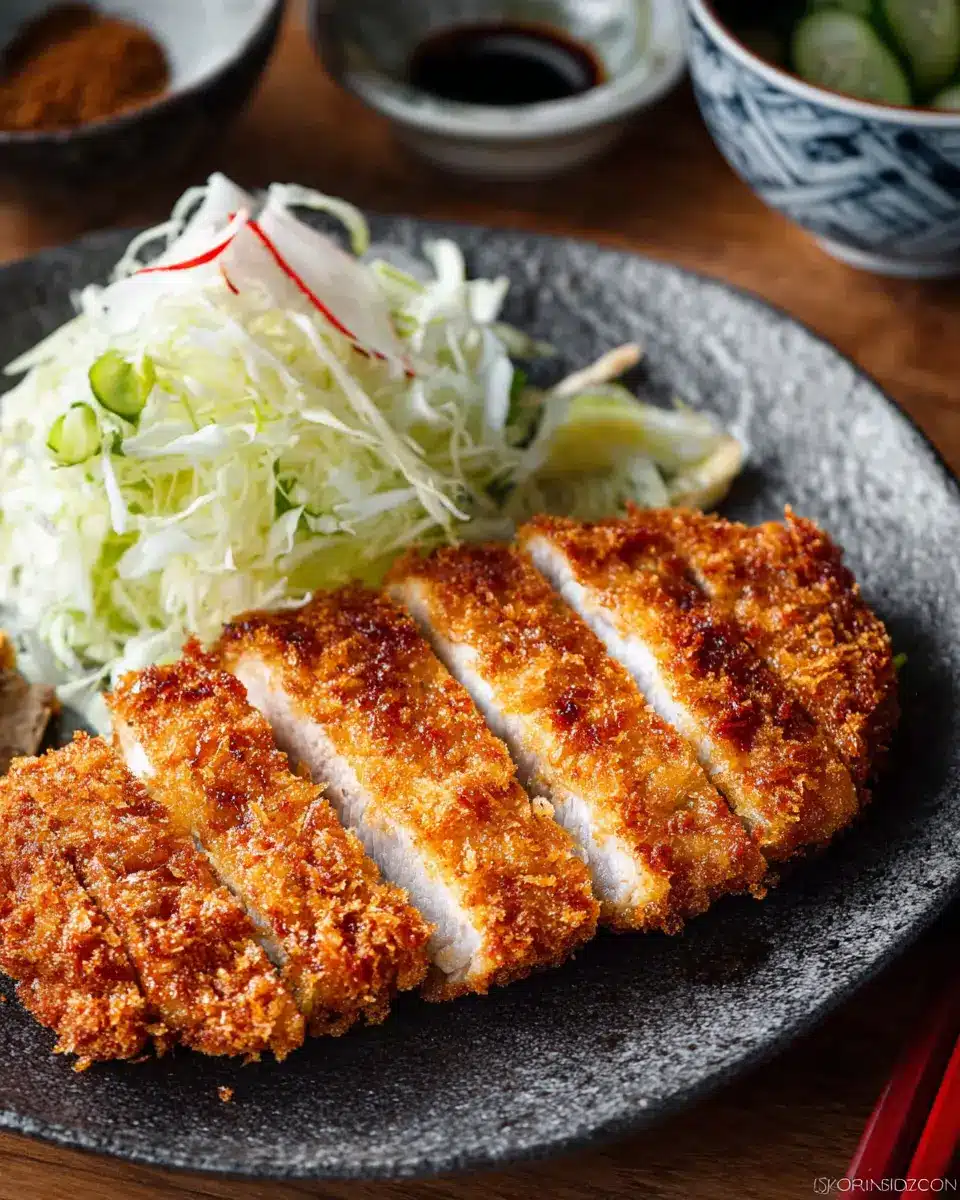
Ingredients for Tonkatsu (Japanese Pork Cutlet)
Essential ingredients for Tonkatsu
When whipping up the delicious Tonkatsu, it all starts with some essential ingredients that come together to create that irresistible crunch and juicy interior. Here’s what you’ll need:
- Boneless pork loin chops: 2 pieces, about ½ inch thick (make sure they’re fresh!)
- Kosher salt: A pinch goes a long way to enhance the flavor.
- Black pepper: Just a dash to season the meat.
- Neutral oil: Enough for deep frying, about 3 cups.
- Panko bread crumbs: This is where the magic happens; they ensure the crispy texture.
- Egg: Helps bind everything together.
- All-purpose flour: Your starting point for the breading.
Optional ingredients for a complete meal
To elevate your Tonkatsu and create a well-rounded meal, consider adding these optional ingredients:
- Shredded cabbage: Adds crunch and freshness; a classic pairing in Japan.
- Japanese sesame dressing: Perfect for drizzling over your cabbage salad.
- Japanese cucumber: Thinly sliced for a refreshing side.
- Sesame tonkatsu sauce: A must for dipping!
Ready to create this delightful dish? Let's dive into the cooking process! For more tips on selecting ingredients and preparing the dish, check out Japanese Cooking 101 for inspiration.
Step-by-step Preparation of Tonkatsu (Japanese Pork Cutlet)
Making tonkatsu, or Japanese pork cutlet, at home can feel daunting, but with this step-by-step guide, you'll become a pro in no time. So, roll up your sleeves, and let's get started!
Prepare the Ingredients
First things first—gather all your ingredients to ensure a smooth cooking process. For this delicious tonkatsu, you’ll need:
- Boneless pork loin chops (2 pieces, ½ inch thick)
- Panko breadcrumbs (½ cup)
- Egg (1 large)
- All-purpose flour (2 Tbsp)
- Neutral oil (enough for deep-frying)
- Kosher salt and black pepper for seasoning
Additionally, if you enjoy a fresh side, prepare a shredded cabbage salad using:
- ¼ head green cabbage
- 1 Japanese or Persian cucumber
This vibrant salad pairs beautifully with your tonkatsu!
Make the Shredded Cabbage Salad
Shredded cabbage is a classic accompaniment for tonkatsu. Using a cabbage slicer, finely shred ¼ head of green cabbage. If you don’t have one, a sharp knife works just as well. Diagonally slice 1 Japanese or Persian cucumber and mix them in a bowl. Optionally, prepare a Japanese sesame dressing for an added burst of flavor. You can find this dressing at local Asian grocery stores or even make your own!
Prepare the Sesame Dipping Sauce
While the salad is setting, let’s whip up the dipping sauce. In a mortar and pestle, grind 1 tablespoon each of toasted white and black sesame seeds, leaving some seeds unground for texture. Split 4 tablespoon of tonkatsu sauce onto small plates or bowls, and encourage your guests to mix in the sesame seeds for a nutty finish. If you want a more straightforward approach, you can drizzle plain tonkatsu sauce directly on the cutlets.
Bread the Beef Cutlets
Now for the fun part! Start by seasoning your boneless beef cutlets with salt and pepper. Dredge each cutlet in flour to coat, ensuring to shake off excess. Next, dip them into the beaten egg mixed with a touch of oil to help it stick, and finally, coat them with panko breadcrumbs. Press gently to ensure a firm adherence, then set aside for a few minutes. This resting time is crucial to create that airy, crispy texture you’re aiming for.
Cook the Tonkatsu
Heat your oil in a pot to about 340°F (170°C). Gently lower one breaded cutlet into the hot oil. Cook without touching for 1 minute before flipping to the other side for another minute. Allow draining excess oil on a wire rack, and let it rest briefly to crisp further. Follow the same method for the second cutlet, and then increase the temperature for a second fry to achieve that golden perfection.
Once both cutlets are fried and resting, slice them into thick portions. Serve hot alongside the refreshing cabbage salad and sesame dipping sauce for a complete and satisfying meal. Enjoy your homemade tonkatsu!
For more tips on perfecting your technique, check out Japan Centre for authentic ingredients and additional recipe inspirations!
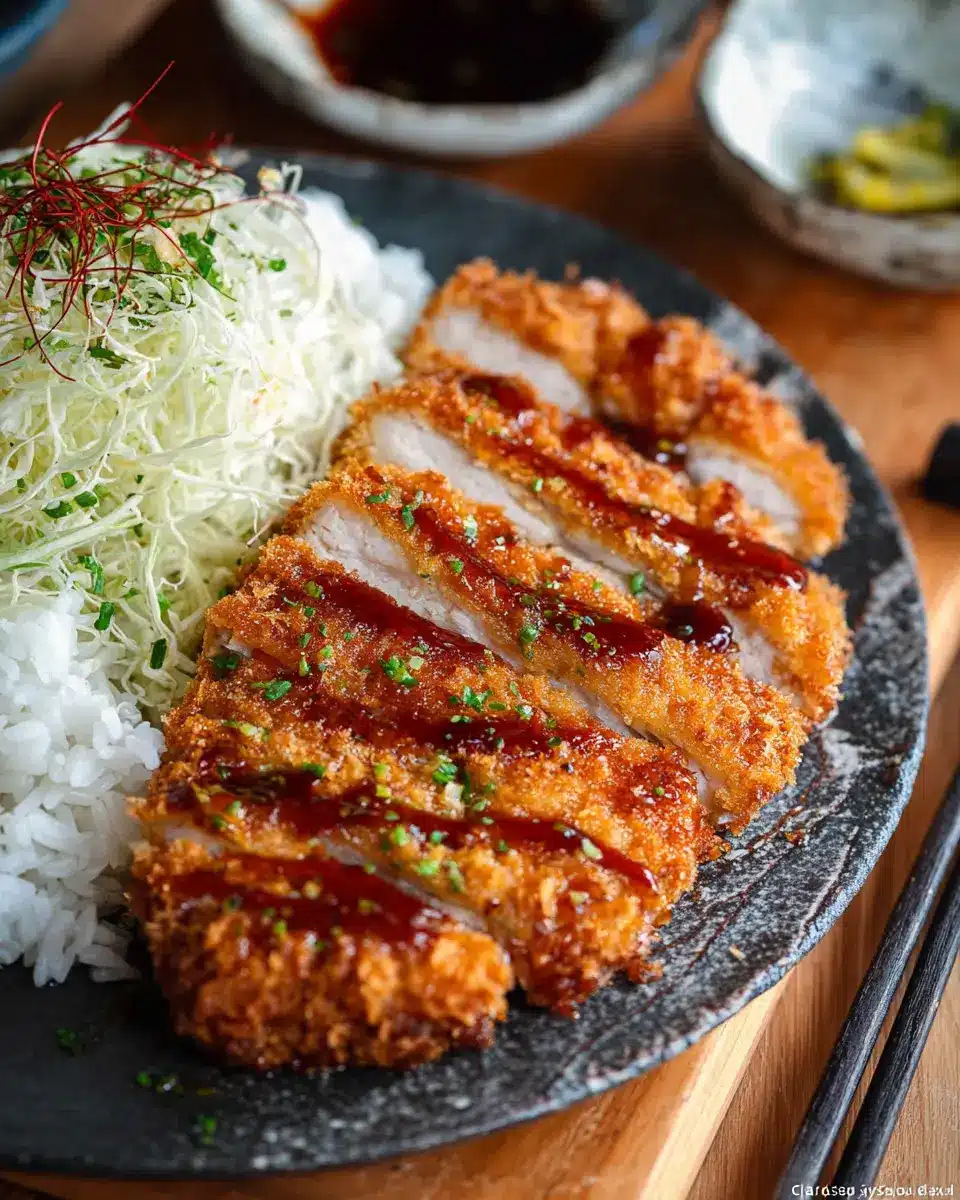
Variations on Tonkatsu
Baked Tonkatsu for a Healthier Option
Looking for a guilt-free way to enjoy your Tonkatsu Japanese Pork Cutlet? Consider trying Baked Tonkatsu! Instead of deep-frying, simply coat your pork in panko and bake it on a lined baking sheet at 400°F (200°C) for about 20-25 minutes. This method still gives you that delightful crunch without all the oil. Plus, you can pair it with a fresh salad for a nutritious meal.
Discover more about healthier frying methods from sources like Healthline.
Tonkatsu with Different Sauces
Tired of the same old dipping sauce? What if you could elevate your Tonkatsu Japanese Pork Cutlet with different flavors? Try serving it with a tangy miso-based sauce for a savory twist or a sweet chili sauce that adds a kick. For those who love a bit of zing, a mixing of soy sauce, vinegar, and a drizzle of honey can create a vibrant dip. Experimenting with sauces can turn your classic dish into a personalized culinary experience!
Curious about sauce pairings? Check out Serious Eats for creative ideas!
Cooking Tips and Notes for Tonkatsu
Importance of using fresh panko
Using fresh panko is crucial for the best Tonkatsu Japanese Pork Cutlet. Fresh nama panko offers a lighter, airier texture that crisps up beautifully when fried. If you can't find fresh, don't worry! You can easily moisten store-bought dried panko to achieve a similar effect. Just give it a light spray of water and let it rest for about 15 minutes.
Tips for perfect frying temperatures
Temperature control is key when frying tonkatsu. Aim for an oil temperature of 340°F (170°C) for the initial fry and 355°F (180°C) for the second fry. Use a digital meat thermometer to ensure accuracy, or employ the chopstick test—tiny bubbles around the tip indicate it's ready. This helps avoid greasy cutlets and assures a perfectly cooked and golden exterior.
For more tips and insights on Japanese cuisine, check out Just One Cookbook.
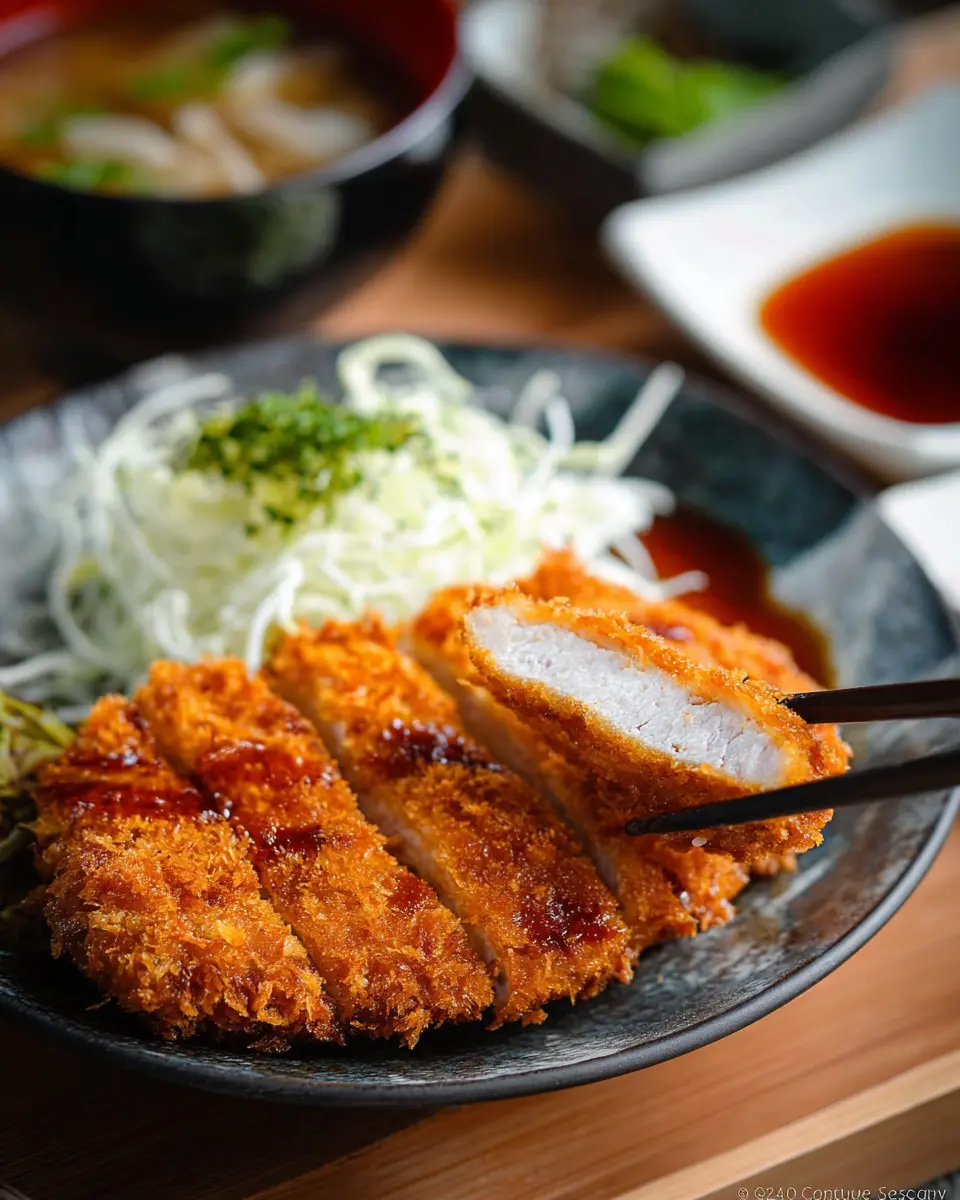
Serving Suggestions for Tonkatsu
Pairing Tonkatsu with Side Dishes
Serving Tonkatsu Japanese Pork Cutlet is all about balance! Traditional sides like a fresh shredded cabbage salad provide a crunchy contrast to the rich cutlet. You can also pair it with a side of steamed rice for a filling meal or miso soup to enhance the umami flavors. Some people even enjoy a refreshing cucumber salad or pickled vegetables for a zesty kick.
Creative Ways to Serve Tonkatsu
Elevate your presentation by slicing the tonkatsu into thin strips and arranging them atop a bed of salad. For a fun twist, consider serving it as a filling in a rice bowl or inside a homemade sandwich. You can even create katsu curry by topping your cutlet with flavorful curry sauce—it's a cozy comfort dish that will surely impress. Don't forget to try different dipping sauces like spicy mayo for an exciting flavor exploration!
Time Breakdown for Tonkatsu
Preparation Time
The magic of making Tonkatsu (Japanese Pork Cutlet) starts with just 15 minutes of prep. This is your time to gather ingredients, prepare the cabbage, and get everything in order for a smooth cooking experience.
Cooking Time
Next, the actual cooking process will take about 15 minutes. That’s just enough time to turn those tender pork loin chops into golden, crispy cutlets that the whole family will love!
Total Time
In total, you’ll spend roughly 30 minutes from start to finish. Ideal for a weeknight dinner that feels special yet is quick and easy to whip up. Want to dive deeper into Japanese cooking? Check out this guide on Japanese cuisine.
Nutritional Facts for Tonkatsu
Calories
A serving of Tonkatsu (Japanese Pork Cutlet) contains around 523 calories. This hearty dish packs a flavorful punch while being indulgent enough to satisfy your cravings, making it a great treat for special occasions or family dinners.
Protein
With 27g of protein per serving, Tonkatsu is an excellent choice for those looking to boost their protein intake. It's perfect post-workout fuel or a fulfilling meal for a busy day.
Sodium
Each serving of Tonkatsu contains about 491mg of sodium. While this contributes to the dish's savory essence, it's wise to enjoy it in moderation, especially if you're watching your sodium levels. For further details on dietary sodium guidelines, check out the American Heart Association.
FAQs about Tonkatsu
Can I make Tonkatsu without deep frying?
Absolutely! You can create a delicious version of Tonkatsu Japanese Pork Cutlet by baking it instead of deep frying. Just coat your seasoned pork with panko, then place it on a baking sheet lined with parchment paper. Bake at 400°F (200°C) until golden brown and crispy—this method is healthier and still yields a tasty crunch!
What can I substitute for beef in Tonkatsu?
If you want a variation, try using turkey or chicken instead of beef. Both meats can soak up all the flavors from your marinades and seasonings, and they fry beautifully as well. Turkey bacon can also add a unique twist, giving your Tonkatsu a lighter profile without skimping on that satisfying crunch.
How do I store and reheat leftover Tonkatsu?
To keep leftovers fresh, store them in an airtight container in the fridge for up to three days. For reheating, place the cutlets in the oven at 350°F (180°C) for about 15–20 minutes. This method helps retain the crispiness of the breading, making every bite just as enjoyable as when it was freshly cooked!
Conclusion on Tonkatsu
In conclusion, Tonkatsu (Japanese Pork Cutlet) is a delightful dish that perfectly combines crispy textures and savory flavors. Whether enjoyed as a weeknight meal or a special treat, it’s sure to impress family and friends alike. Give this recipe a try and savor the joy of homemade tonkatsu!
Tonkatsu (Japanese Pork Cutlet)
Equipment
- cabbage slicer
- digital meat thermometer
Ingredients
For the Shredded Cabbage Salad (optional)
- 0.25 head green cabbage
- 1 Japanese or Persian cucumber
- 4 tablespoon Japanese sesame dressing (or make homemade)
For the Sesame Dipping Sauce
- 1 tablespoon toasted white sesame seeds
- 1 tablespoon toasted black sesame seeds
- 4 tablespoon tonkatsu sauce (store bought or homemade)
For the Breading
- 0.5 cup panko (Japanese breadcrumbs) (or more, as needed; use fresh *nama panko* (生パン粉), if available)
- 1 large egg (50 g each w/o shell)
- 0.5 tablespoon neutral oil (for the egg)
- 2 tablespoon all-purpose flour (plain flour)
For the Tonkatsu
- 2 pieces boneless pork loin chops (½ inch thick, 100 g each)
- 0.5 teaspoon Diamond Crystal kosher salt
- 0.125 teaspoon freshly ground black pepper
- 3 cups neutral oil (or enough for deep-frying)
Instructions
Preparation
- If you prefer not to deep-fry, see my recipe for Baked Tonkatsu.
- Gather all the ingredients.
Prepare the Shredded Cabbage
- Shred ¼ head green cabbage finely and slice cucumber diagonally.
- Toss cabbage and cucumber together; prepare dressing and refrigerate.
Make the Dipping Sauce
- Grind sesame seeds and divide among dipping plates with tonkatsu sauce.
Prepare the Fresh Panko and Breading
- Moisten panko with water and set aside for 15 minutes.
- Prepare egg mixture and flour in separate dishes.
Prepare the Pork
- Remove excess fat and make slits on connective tissue of pork.
- Pound meat to flatten and season both sides.
Bread the Pork
- Dredge pork in flour, dip in egg mixture, and coat with panko.
- Set aside for 5–10 minutes.
Cook: The First Fry
- Preheat oil to 340ºF (170ºC) and fry one cutlet for 1 minute, then flip.
- Rest on a wire rack or paper towel for 4 minutes.
The Second Fry
- Increase oil temperature to 355ºF (180ºC) and fry each cutlet for 30 seconds per side.
- Drain on the wire rack for 2 minutes.
Serve
- Cut tonkatsu into slices and serve with cabbage, cucumber, and dipping sauce.
Leave a Reply