
Introduction to Spanish Paella
What is Paella and Why is it So Popular?
If you've ever visited Spain, chances are you’ve encountered the vibrant and aromatic Spanish paella. This classic dish hails from the Valencia region and is a beloved symbol of Spanish cuisine. At its core, paella is a rice dish, traditionally cooked in a wide, shallow pan, and bursting with a medley of flavors. It often features a delightful combination of protein—think chicken, seafood, or even a mix of both—paired with fresh vegetables and seasoned with saffron, which gives it that signature golden hue.
So, what makes paella so popular? This meal is more than just food; it’s a celebratory experience. It’s often enjoyed during family gatherings or festive occasions, bringing people together around the table. According to a 2022 study by Food and Wine, the communal nature of sharing a paella fosters social connections, making it a culinary favorite.
Whether you’re a seasoned cook or trying something new in the kitchen, making your own Spanish paella is a satisfying journey that captures the essence of Spanish culture. Ready to dive in? Let’s get started with the recipe!
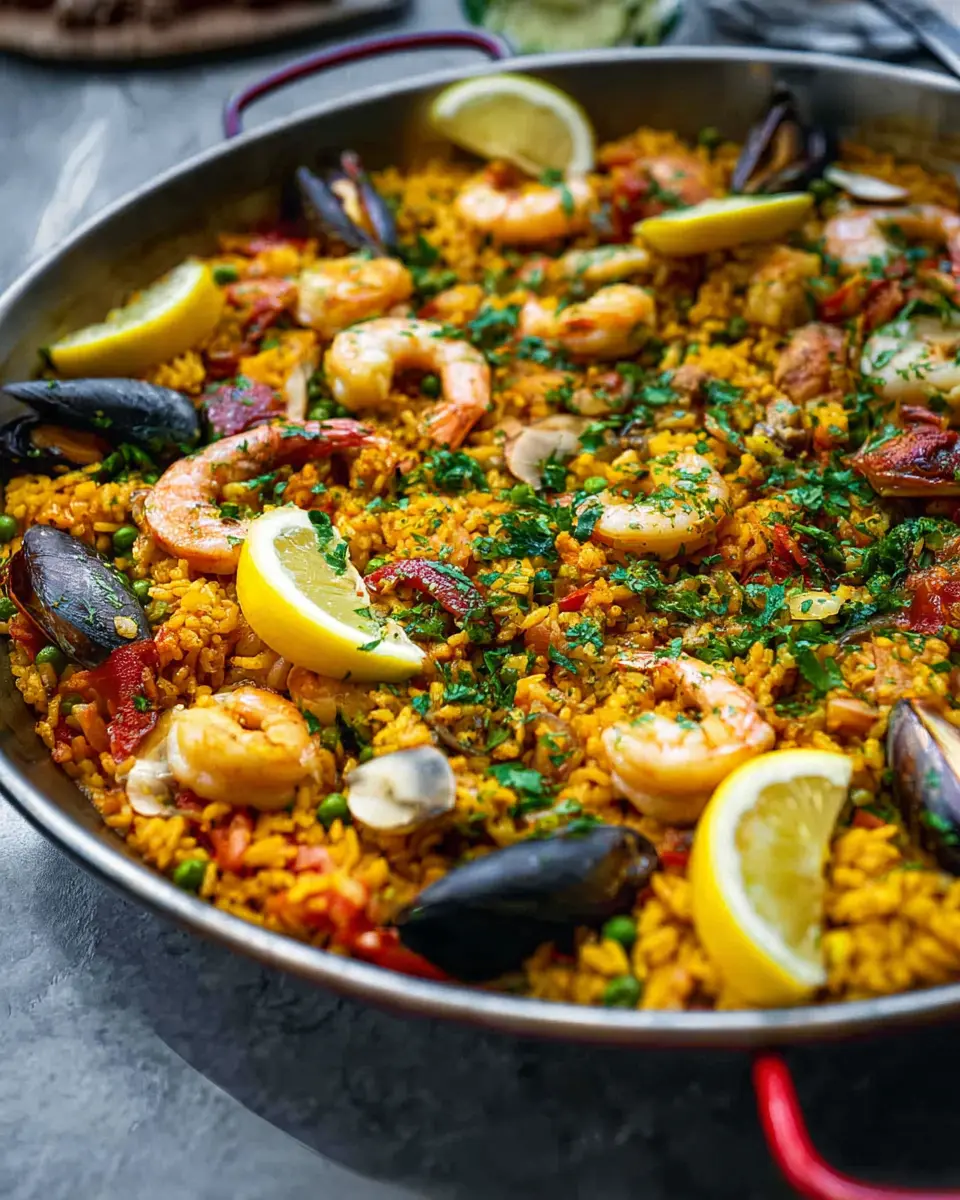
Ingredients for Spanish Paella
Essential ingredients for authentic flavor
To create an authentic Spanish paella bursting with flavor, start with these essential ingredients:
- Spanish Rice: Opt for varieties like bomba or calasparra.
- Saffron: This precious spice adds that distinctive golden hue and depth.
- Olive Oil: Use high-quality extra virgin olive oil to sauté your vegetables.
- Fresh Vegetables: Onions, bell peppers, and garlic form the base, while tomatoes lend freshness.
- Protein: Typically, a combination of chicken and seafood like shrimp, mussels, and calamari makes for a delightful mix.
If you’re curious about traditional techniques, the Spanish Culinary Institute provides valuable resources on paella preparation.
Optional additions for a personalized touch
Feel free to experiment! Enhance your paella with optional ingredients like:
- Turkey Bacon or Chorizo: These can add a smoky, rich flavor.
- Vegetables: Artichokes, green beans, or peas can introduce new textures and flavors.
- Herbs: A sprinkle of fresh parsley not only adds color but also a fresh aroma.
Personalizing your dish not only reflects your taste but also makes for a more memorable dining experience. Enjoy the process of crafting your perfect Spanish paella!
Preparing Spanish Paella
Making Spanish paella at home might seem daunting at first, but with proper preparation and a step-by-step guide, you'll be enjoying this vibrant dish in no time! Let's dive into how you can create your own flavorful fiesta in a pan.
Gather and prep your ingredients
Before you even think about turning on the heat, let’s make sure you have everything you need right at your fingertips. Start by gathering:
- Olive oil: Preferably Spanish extra virgin for authentic flavor.
- Vegetables: Diced onions, bell peppers, and garlic provide a fragrant base.
- Tomatoes: Fresh roma tomatoes or tomato sauce for sweetness.
- Spices: Pay special attention to saffron for that signature golden hue.
- Meat: Cut your chicken thighs into bite-sized pieces and set them aside.
- Rice and broth: Spanish rice is ideal, but medium grain can work too. Don’t forget the broth as it’s essential for cooking the rice!
Prep all your ingredients before you start cooking. This will streamline the process and ensure you don't miss anything!
Sauté the vegetables
In a 14-inch skillet or paella pan, heat your olive oil over medium heat. Toss in your diced onions, bell peppers, and minced garlic. Sauté until the onions become translucent—this step lays the flavorful foundation for your Spanish paella. Stir in the chopped tomatoes, bay leaf, paprika, a pinch of saffron, and season generously with salt and pepper. Allow everything to mingle and cook for about 5 minutes. If you want to know more about cooking techniques, check out reputable sources like Fine Cooking.
Incorporate the chicken and spices
Next, add those delicious chicken pieces to the mixture along with 2 tablespoons of fresh chopped parsley. It's important to let the chicken sauté slightly to absorb all the wonderful flavors. After a minute, it’s time to sprinkle in the rice. Stir just enough to mix the ingredients but resist the urge to stir frequently from here on out.
Add rice and broth
Pour in the chicken broth slowly around the pan, ensuring the rice settles into an even layer. This is crucial; don't mix anything afterwards! Bring the mixture to a gentle boil, then reduce the heat to low. You can give the pan a little shake to help the rice settle, which is perfect for creating that crispy bottom layer known as socarrat.
Layer in the seafood and finish cooking
After about 15-18 minutes, you'll start to see most of the liquid absorbed. It’s now time to nestle in your shrimp, mussels, and calamari. Add the frozen peas on top and allow it to cook uncovered for another 5 minutes. Keep an eye on the rice; if it’s not quite tender yet, add a splash more broth or water.
Let it rest before serving
The final step—remove your pan from the heat! Cover it with a lid or foil and let it rest for about 10 minutes. This resting period helps the flavors meld and gives the rice a chance to absorb any remaining moisture.
Garnish your Spanish paella with fresh parsley and citrus slices—your dish is ready to impress! This vibrant meal is not just delightful to eat but also a joy to prepare. Dig in!
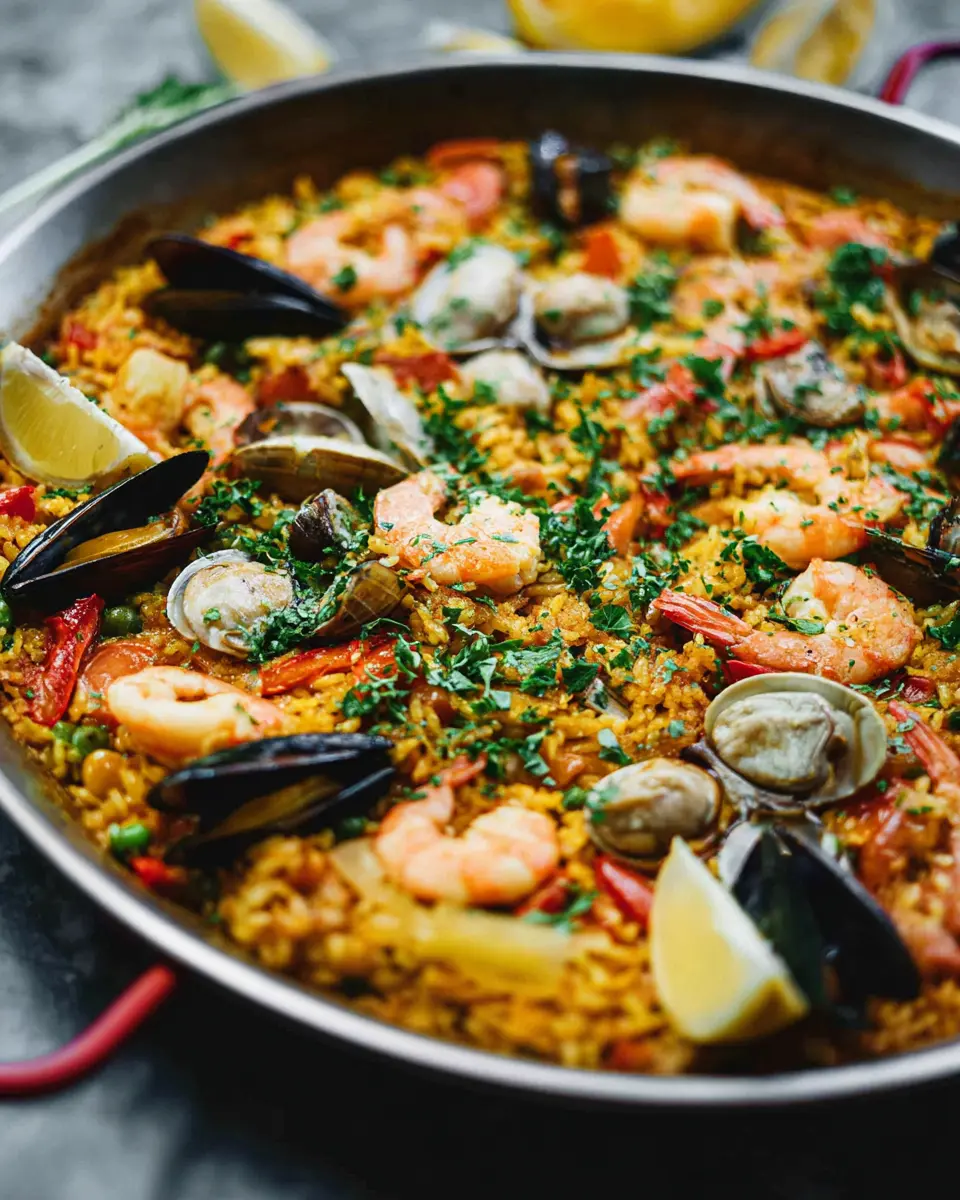
Variations on Spanish Paella
Vegetarian Paella
Looking for a hearty yet meat-free option? Vegetarian paella is a delightful way to enjoy the flavors of Spain without the meat! Simply substitute chicken and seafood with an array of vibrant vegetables, such as artichoke hearts, green beans, mushrooms, and asparagus. The key here is to ensure that your vegetable medley is well-seasoned for a satisfying experience.
Paella Valenciana
Paella Valenciana is a traditional take on this iconic dish, originating from the Valencia region. Typically, it features chicken, rabbit, and a medley of vegetables like artichokes and green beans. When crafting your paella, consider using locally sourced ingredients for authentic flavors. This variation really highlights the rich culinary heritage of Spain!
Seafood Paella
For seafood lovers, seafood paella offers a splash of the ocean in every bite! Instead of using meat, mix in shrimp, mussels, and calamari for a delicious twist on the classic. Pair with fresh herbs and lemon for zesty notes that truly elevate the dish. If you love the sea, this one’s for you!
Discover more about these variations on prestigious sites like Spanish Sabores and Food & Wine for additional insights on this beloved dish!
Cooking Tips and Notes for Spanish Paella
Achieving the Perfect Socarrat
To create that delicious socarrat, the crisp layer of rice at the bottom of your Spanish paella, refrain from stirring once you add the broth. Instead, allow the rice to simmer gently and let the heat do its magic. After about 15 minutes, adjust the heat to medium-high for the last few minutes of cooking, listening for that satisfying crackle as it toasts.
Adjusting Textures and Flavors
Feel free to customize textures and flavors in your paella. For a creamier consistency, add a dash more broth; for a flavor boost, a sprinkle of smoked paprika can elevate your dish. Plus, mixing different vegetables or proteins can add delightful surprises—perhaps some artichokes or even chicken ham for variety. The essence lies in balancing freshness with the comforting richness of the dish. For more tips on Spanish cuisine, consider checking out resources from the Spanish Cooking Institute.
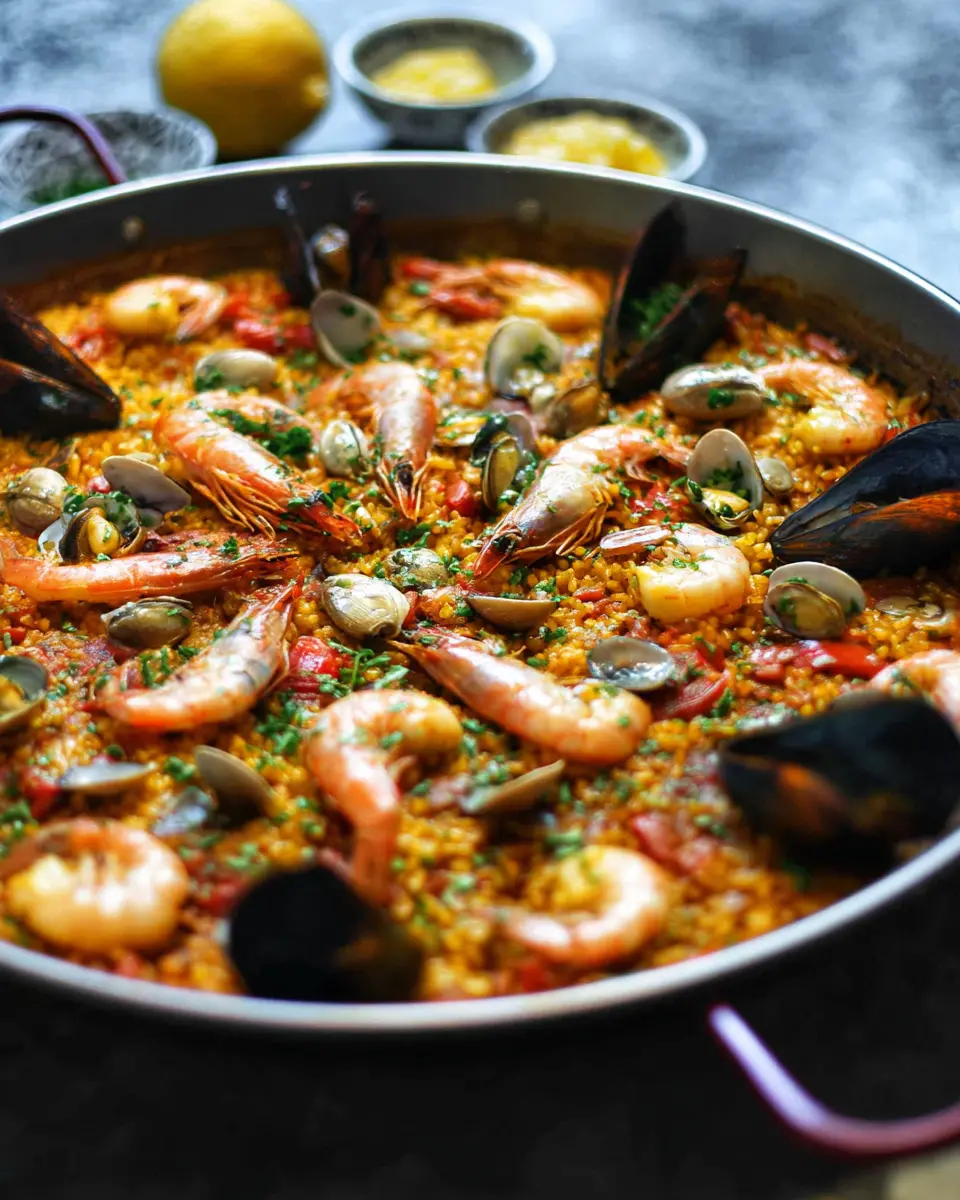
Serving suggestions for Spanish Paella
Ideal accompaniments to enhance the meal
To elevate your Spanish paella, consider serving it with a light side salad featuring fresh greens, tomatoes, and a zesty lemon vinaigrette. Sliced crusty bread acts as the perfect vehicle for scooping up any leftover goodies. For an authentic touch, pair it with a refreshing gazpacho, the chilled tomato soup from Spain that balances well with the hearty flavors of paella. Don’t forget about a citrusy slice of lemon on the side; it brings brightness to the dish.
Best ways to present and serve paella
Presentation is key when serving your Spanish paella. Serve it directly from the pan for an inviting communal feel. Garnish with vibrant sprigs of fresh parsley and lemon wedges to add color and freshness. You could also consider placing some beautiful platters around the table with extra seafood or vegetables for guests to customize their plates. If you want to add a touch of Spain to your dining experience, consider playing traditional Spanish music in the background.
For a great visual guide on serving paella, check out this expert serving guide that gives you tips on authentic Spanish dining etiquette.
Time breakdown for Spanish Paella
Understanding the time commitment for preparing Spanish Paella is essential for planning a delightful meal! Here’s a quick overview of the time breakdown:
Preparation time:
20 minutes – This is when you’ll chop all your ingredients and gather everything you need.
Cooking time:
40 minutes – The magic happens during this time as all the flavors meld together!
Total time:
1 hour – With just an hour, you'll have a beautiful, delicious paella ready to impress your guests.
For those curious about the cooking process, I've found that engaging with the ingredients helps set the right mood for cooking. To explore the full recipe, check out the full details here.
If you’re feeling adventurous, consider experimenting with different proteins or vegetables to create your unique twist on this Spanish classic!
Nutritional Facts for Spanish Paella
Calories
A serving of Spanish paella contains approximately 535 calories. This makes it a satisfying meal that can fuel your day without overindulging.
Protein
Packed with 37 grams of protein, this dish provides a hearty combination of protein sources from chicken, seafood, and the rice itself, making it a great option for muscle repair and overall health.
Sodium
The sodium content in Spanish paella is around 1159 milligrams per serving. While the flavor from seasonings and broth adds zest, it’s a good idea to monitor your overall intake if you’re watching your sodium levels.
For more detailed nutritional insights, check out reputable sources like the USDA Food Database or consult with a nutritionist for personalized dietary advice.
FAQ about Spanish Paella
Can I make paella without a traditional pan?
Absolutely! While a traditional paella pan enhances the cooking experience, you can use any wide, shallow skillet to create your own version of Spanish paella. The key is to ensure the rice can spread out evenly to achieve that perfect socarrat—a crispy bottom layer that true paella lovers cherish.
What type of rice is best for paella?
For an authentic taste, use bomba rice or other medium-grain varieties like Calasparra or Arroz Redonda. These types absorb flavor well and cook evenly. If those aren’t available, Calrose rice is a decent substitute, though it won’t replicate the true paella experience fully.
How can I store leftovers?
To store your delicious leftovers, let the paella cool completely before transferring it to an airtight container. It can be kept in the refrigerator for up to three days, or you can freeze it for up to a month. When reheating, add a splash of broth to restore moisture and heat on low for the best texture.
For more insights about paella, check out The Spanish Food Bloggers for delicious variations and cooking tips!
Conclusion on Spanish Paella
Making Spanish paella at home is not just a culinary adventure—it's a celebration of flavors! I encourage you to gather your friends and family, and savor the joy of creating this traditional dish together. Remember, the secret lies in good ingredients and a pinch of love! Happy cooking!
Spanish Paella
Equipment
- 14 inch skillet
- paella pan
Ingredients
- ¼ cup Extra virgin olive oil Spanish EVOO if available
- 1 Onion diced
- 1 each bell pepper diced; preferably ½ red and ½ green
- 4 cloves Garlic
- 3 each roma tomatoes very finely diced (or 8 oz. tomato sauce)
- 1 Bay leaf
- 1 teaspoon paprika sweet or smoked
- 1 pinch saffron threads
- Salt
- Pepper
- ¼ cup white wine
- 4 each boneless, skinless chicken thighs cut into pieces
- ¼ cup fresh chopped parsley chopped, divided
- 2 cups Spanish rice
- 5 cups chicken broth
- ½ cup frozen peas
- ½ lb jumbo shrimp or prawns about 12, peeled, tail on
- ½ lb mussels cleaned properly (beards off)
- 8 oz calamari rings
- Lemons for garnish
Instructions
- Add olive oil to a skillet over medium heat. Add the onion, bell peppers and garlic and cook until onion is translucent.
- Add chopped tomato, bay leaf, paprika, saffron, salt and pepper. Stir and cook for 5 minutes.
- Add white wine and cook for 10 minutes. Taste and add salt if needed.
- Add chicken pieces, 2 tablespoons chopped parsley and rice to the pot. Cook for 1 minute.
- Pour the broth slowly all around the pan and jiggle the pan to get the rice into an even layer. (Do not stir the mixture going forward!).
- Bring mixture to a boil. Reduce heat to medium low. Give the pan a gentle shake back and forth just once or twice during cooking.
- Cook for about 15-18 minutes (uncovered), then nestle the shrimp, mussels and calamari into the mixture, sprinkle peas on top and continue to cook (without stirring) for about 5 more minutes.
- Remove pan from heat and cover pan with a lid or tinfoil. Place a kitchen towel over the lid and allow to rest for 10 minutes.
- Garnish with fresh parsley and lemon slices. Serve.
Leave a Reply